MikesGig features affiliate links to help support our content. At no cost to you, we may earn a commission on affiliate purchases.
Using Slate Digital’s ML1A and ML2A Modeling microphones, the online drum educator demonstrates how a single recording setup can unlock a wide range of professional drum sounds and creative possibilities
DrumsByDavid is part of a vanguard of next-gen online music educators who have built a following through an accessible approach to professional recording techniques. Using an organic mix of technique demonstrations, recording tips, and signal flow rundowns, David’s channel provides a wealth of information on exploring and recording drum sounds in the residential studio or practice space and getting professional results. Some of his latest go-to tools are Slate Digital’s Virtual Microphone System (VMS) software and the ML-1A large diaphragm condenser and ML-2A small diaphragm cardioid microphones, which has given him a versatile sonic playground in which to continue his exploration into the outer reaches of home drum recording and beyond.
Confidence, character, and versatility
A life-long student of drums who came into recording later in life, David saw a gap in how information for recording drummers was being taught and shared. Seeking a more accessible approach that didn’t require a high-end recording studio, he sought to create educational content that balanced time-tested professional techniques with an open approach to experimentation and gear selection to provide his followers with a path to the next level. “There is so much information out there, but I found that it was either highly gate-kept and not digestible by a beginner, or it was overly DIY without any ambition or focus on professional results,” he explains. “Ultimately as a content creator now you need a mix of that ‘quick-fix’ type information, and more long-form, thoughtful explorations of the topics, but I try to encourage people to explore this stuff in-depth and impart that love of learning and exploration on them.”
DrumsByDavid examines the sounds and techniques around drum recording from multiple angles — including mic placement technique, signal chain development, analyzing the qualities in classic recordings, and more. His approach emphasizes the importance of musical choice and utilizing technique to find the right ‘character’ for each mix. “The beauty of right now is that there is no real ‘standard sound’ anymore aside from just a general expectation that you are delivering something up to a certain production quality,” he states. “I’ve noticed a growing backlash against generative AI where producers and engineers are starting to favor character and humanity again, and this personally is something I feel very excited about. People are doing everything from really crunchy, characterful mixes, to super polished, to heavily compressed that just hit you in the chest now, and it’s often those details that catch you and make you want to listen to a track over and over again.”
“If you are a working drummer and have a limited budget, you often have to choose between character or versatility. The value prospect of the Slate modeling mics and VMS was immediately obvious to me because it enables you to have the access of both without the kind of massive, expensive microphone closet that such would usually require.”
One set of mics for every session
David began using Slate VMS when he realized the massive potential it could offer to drummers in his position. Already a long-time fan of Slate’s Virtual Mix Rack and Effects Plugins, it was a natural progression to explore what their modeling microphones had to offer. “Just using the microphones themselves without any of the profiles loaded up, it was immediately obvious to me how crisp and clear they sound which is ideal for a drummer,” he explains. “You’re looking for a clean pallet upon which you can apply character or processing, and this gives you everything you need.”
“The real really eye-opening part was once I started experimenting with the different microphone models. It was incredibly easy to get a ‘generically good’ sound based on any popular microphone they have, but because the plugin is laid out so beautifully, it really encourages you to experiment and look for the kinds of ‘good mistakes’ that lead to a signature sound, or a character that suits a recording.
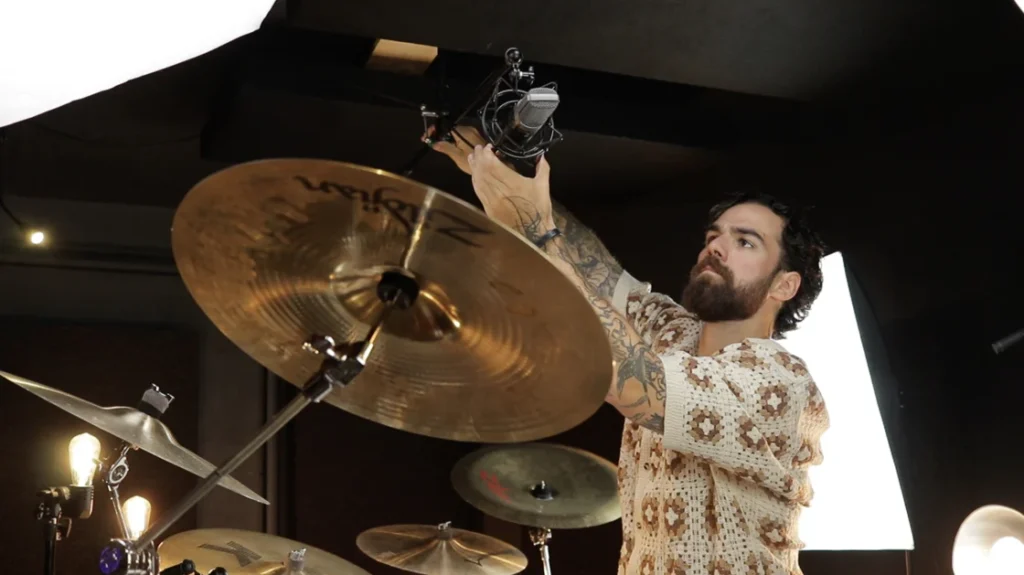
David’s current setup in his studio is a pair of Slate ML-2As as room mics, with an ML-1A serving as a mono overhead. Although he uses the stock profiles in VMS often, it’s the unique ability to combine and process between multiple models that he finds the most inspiring. “The ease in which you can do this and how much it encourages you to ‘play’ with sound combinations you might never think to use gives you an incredible amount of sonic flexibility that you simply can’t get out of anything else. I’ve often found myself combining ‘unusual’ drum mic combinations — such as using a Beta52 (a known bass drum mic) to fatten up a snare sound — and being pleasantly surprised by the results. It’s an incredible system that I find myself exploring every day.”
“The fact that it can do all of these things — ‘classic’ sounds that any engineer or producer might want, AND be this laboratory for exploring different sonic ideas — make it a very powerful, and versatile set of tools. A drummer could easily have a set of these and use them on every session because it’s that easy to get something equally great, but totally different each time.”
“You combine that with the Slate Virtual Mix Rack, or the SSL plug-ins if you want more of a console feel and you can really do anything,” he continues. “I tend to start every microphone chain with the VCC Channel from VMR to add an analog feel to each channel, and then FG-S and FG-N as EQs that I dial in by ear. The lack of a ‘visual graph’ is a real plus here because it teaches you how to dial in for the mix based on feel, rather than ‘standard practice’. I’ll then use FG-401 for compression and either the Hollywood or London saturation plugins to add a bit more life and harmonics.”
“It’s almost too many options! The message is clear though, it’s room to explore and I think in an era when drum sounds can be a little ‘safe’, it’s very inspiring to work with and gives you professional results.”
A lifelong learner behind the kit
Describing himself as a ‘drummer first, recording engineer second’, David’s quest to provide accessible educational content on his channel always leads him back to the same premise: that a genuine desire to learn and grow on the instrument will ultimately lead to the most satisfying creative outcomes. To that end, his search for new sounds, techniques, and solutions embraces that mindset and gives him a seemingly never-ending source of topics to share with his growing number of followers. “It really is about sharing all the information I can and providing a perspective that encourages drummers to find their footing on the kit, and in creating the sounds they want to hear,” he states. “I’m always learning, and I want all of them to feel they can as well. There’s always something new to discover, and a new way of getting a drum sound that is interesting and exciting.”
“Slate VMS has given me a great platform for this and the ability to chase any sound I, or anyone I work with, could possibly want, without having to break the bank on a massive microphone closet.”
Cooking in the Studio with Slate: David’s Favorite Snare Chain
- Slate Microphone Model: RF-AX5 + RF-B52
- Plugins: VCC Channel, Hollywood, FG-S, FG-Stress
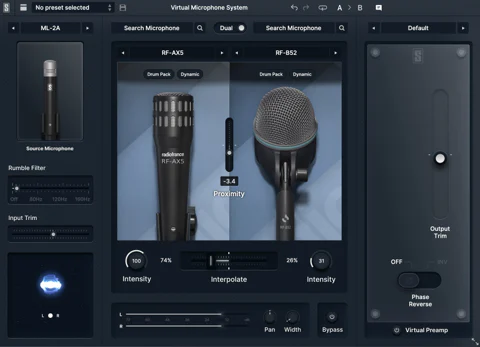
“I’m a stickler for finding ways to always keep my snare drums sounding organic but HEAVY, and using a blend of the RF-B52 microphone paired with a standard RF-AX5 microphone, I am able to add some extra beef in post-production when needed. Once the signal hits the VMR the amount of flexibility just 4 plugins gives me is amazing for keeping my workflow simple and effective.”
Slate VMS Tone Recipe: David’s Favorite Kick Chain
- Slate Microphone Model: RF-AX6
- Plugins: VCC Channel, London, FG-N, FG-401
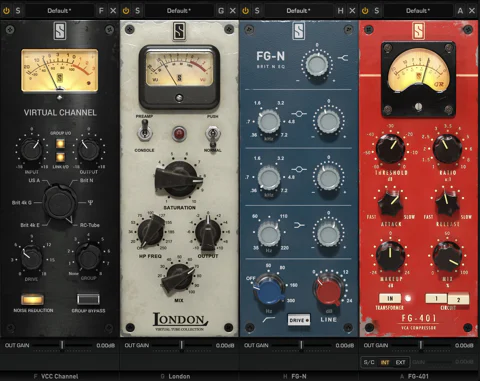
“When recording with the ML-2A, the source is so clean that mixing in post becomes so easy. My approach is to always keep things simple so I can stay true to the source sound I recorded. Having such a clean tone from the RF-AX6 microphone alongside some London saturation to bring out the harmonics. All you really need after that is a little EQ and Compression to tie things together.”
For more information about DrumsByDavid, please visit: https://drumsbydavid.com/
About The Author